
Typography is one of those things that are actually overlooked by many people and yet are crucial in many others. Frequently it’s present yet manages to pervade the way we interpret reality as well as approach the textual content. However, when typography goes beyond the ordinary, it becomes greater than a mere representation of letters and words; it turns into an art form – an art form where the written word and the visual image work in harmony towards making something novel. This is typographic artwork.
What is Typographic Artwork?
In its essence, typographic artwork can be defined as the art of creation where the focus is on type as a form of imagery, where the letters, words, and characters can be utilized as the image. Typographic artwork diverges from text as they intend to be seen, they are created in order to express the visual potential of type. Their focus is more on how the letters actually appear and orient themselves on the page and on one another, as well as how and what they signify in terms of their structure as well as their function.
Picturing a communication medium in which the words themselves become the picture and a painting in which the lettering becomes the design and motifs. That’s typographic artwork. It can be as small as a quote written beautifully or it could be as big as having a whole wall filled with words and nothing but words.
A Brief History of Typographic Art
Typography as an art has been there since the early times when the technology of moving type was developed by Johannes Gutenberg in the 15th century. Instead, the idea of employing type as an artistic tool is relatively new only in the grander scheme of art. It has grown and developed to wide popularity in the early twentieth century, with movements as Futurism and Dadaism. All these advanced movements have placed art practitioners such as Filippo Tommaso Marinetti and Tristan Tzara into refreshing attempts at freeing type from conventional art and writing.
Typography was then taken up again in the 1960s 70s through artists affiliated with the Pop Art movement such as Andy Warhol and Roy Lichtenstein. They incorporated stylistically indignant words expressive symptoms and graphic typography in their works that embraced art, advertisement and pop culture.
At line level, typographic artwork is a style that has seen a caliginous emergence in modernity due to the use of computer technologies. Digital designing has paved the way for the artists to try and mix and match fonts, layouts and tons of effects which could never be even dreamed of earlier. Such advancement in technologies in this information age has given artists more comfort as well as flexibility in doing typographic art and designs beyond what has been seen before.
Another book that calls for attention as an extremely valuable piece of resource is the Elements of Typographic Art.
It is important to note that creating typographic artwork involves a number of practices and procedures that when combined allows a person to come up with a unique and attractive image. Let’s explore these elements in more detail.
-
Fonts and Typefaces
At the center of typographic art are fonts and typefaces, upon which most of the creativity is pinned. This is why the type can enhance the tone of the artwork or make it convey any message depending on the chosen fonts. The serif fonts are much more elegant and classical, which can bring the association of tradition and elegance of classical typeface. Sans-serif fonts, by contrast, are considered more contemporary and don’t have those little tails on the ends of letters. Although, display fonts primarily used for capturing distinctive attention due to their artistic appearances are commonly used in the typer graphic arts.
-
Layout and Composition
Typographic art mainly involves the placement of text on the canvas and this is a very important factor in determining the overall feel of the art piece. This is because when designing the layout of the text, one has to factor in the space between the elements, alignment and the order of arrangement of the text layout. Like setting basic parameters, arts such as differential space between characters called kerning and distance between lines of text known as leading creates harmony in the final output. Some are arranged in a systematic manner where there is an order of items and there are others that have irregular and random designs.
-
Color
Here, the use of color in space has an important meaning for typographic artwork. You may use it to great advantage to intensify emotional charge and draw attention to specific items. The kind of patterns that one is able to find in artists’ works are color contrasts, gradients as well as the overall color palette. An experienced writer also knows that the choice of color can make a reader experience a particular kind of emotion or recall some particular association, that is why, it is an additional code that is used in the piece of text.
-
Texture and Effects
It involves use of messages which can help to puncture the plane and open a third dimension in the typographic art through texture and visual effects. This eye can be achieved through the use of shaded relief, gradient or patterns so as to impart a 3-D look that is on the text. Some artists also take care to enhance even the aesthetics of stoke texture or paper and other similar effects in their designs. These effects can bring about the idea that the text is more active and fascinating in comparison to usual.
-
Integration with Imagery
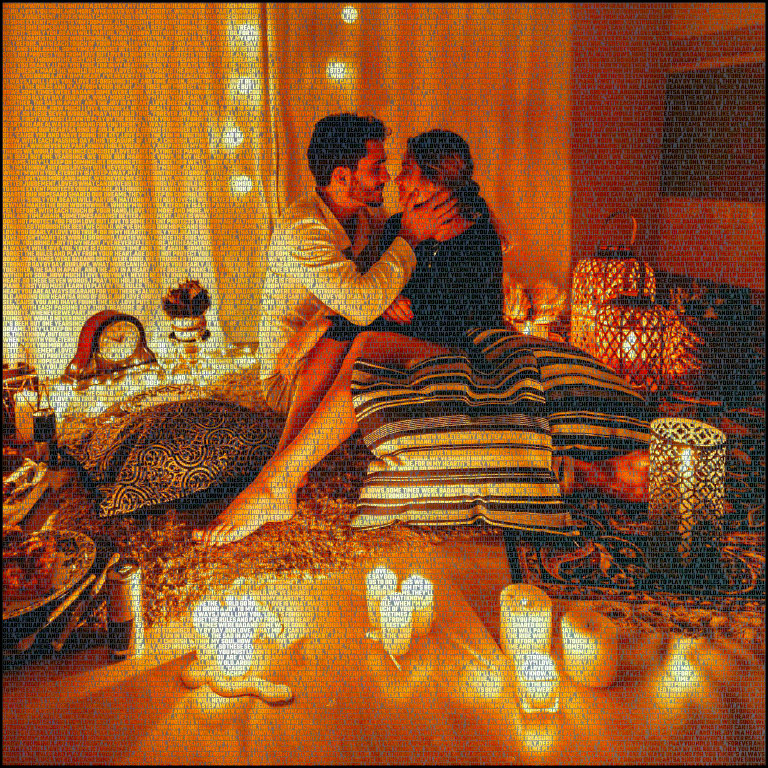
This type of artistic type is normally created using only text but can also incorporate picture media in the creation of art. This may include writing text on a picture, applying the letter forms in forming artistic shapes, or writing text on an illustration. To allow one image to sit or literally nest on top of another makes the artwork more rich and layered and hence offers more beauty.
Examples of Typographic Artwork
As a result, it is high time to dive into examples of typographic artworks that will help to discover the distinctive features of typographic art in question.
-
Minimalist Typographic Posters
Typographic posters include simple elements and clear expressions with fewer letterings. These designers employ few tones of color and simple geometric fonts so that even in these small logos, the firm’s message comes across strongly. One prime example that comes to mind is the famous “Helvetica” poster by Experimental Jetset – it is an embodiment of a minimalist design using the Helvetica font as a primary typeface and looks very polished and contemporary.
-
Hand-Lettered Designs
I love its personal and intimate non-industrial appeal as a form of hand writing fonts as fine art. Hand drawing is common to artists who think it possible to provide lettering in this style together with all its semiotic emotive reflections and inflections, not to mention the relatively minor role of decorative elements in it. Jessica Hische is a famous contemporary artist in this sphere, who has done lots of beautiful and easy-hand hand-lettering design. What is important and quite characteristic to her is the fact that while creating her products she uses traditional techniques and gives her pieces an appearance that is both cute and chic.
3.Word art and shape
Word art and shape typography refer to the art of transforming words or certain text piece into images by arranging the letters in specific shapes.
Word art and shape typography refer to uses of words where an artist uses the words to form a particular shape or pattern. This technique is best illustrated in the works of Christopher Wool who uses post-scribe large stenciled letters to form patterns. Another example is the typographic maps by artist Paula Scher which seems to be map but actually are names of the places squeezed into typographical forms of the respective countries and cities. Shown below is evidence that it is possible to use words in text and not only to communicate a message but also to work as an artwork.
-
Kinetic Typography
It is the use of type in motion and animation which makes the words and fonts to move and bounce around. These kinds of typographic arts are mostly applied in videos, animations, and in any point that is situated in the world of digital technology. It involves creating text effects to crawl, pop up, run, fade and perform other intricate movements. An example of such a scene is the opening credits, touching the movie “Catch Me If You Can” by Kuntzel + Deygas. Thus, besides the creation of mood, the animated text plays an essential role in storytelling since it teaches the viewer where to look and introduces elements of alive motion.
-
Graffiti and Street Art
Using letters and alphabet is common in graffiti and they have been seen on the streets for some time now. Some contemporary street artists such as Banksy and Shepard Fairey include words in their images through graphic writings on walls or stencils containing important political statements. The typography in fire graphic design is often bolder and sharper, even if it is potential shocking and encroaching the personal space of the passer-by. This form of typographic art appears to question the sociology of art and its position between activism, art and public domain. Here, the importance of painting and art in general cannot be underestimated as evidenced by this typographic artwork. Graphic printing not only a sense of aesthetics but depth that conveys meaning, motivation, incitement.
Importance of Painting Arts
-
Communication and Expression
Language and typography are inseparable, which links typography to communication as a powerful element of it. Optical message can be successfully conveyed and possibly emotions and thoughts, when choosing the words and their visualization. It doesn’t matter if it’s encouraging words of having a great day, an ideological phrase, or even poetry – turning text into image increases the effect by adding the verbal with visuals.
-
Branding and Identity
Typography is a language that forms an important part of the branding, because it tells a company’s story. Brand names, clip, and commercial images depend on unique typefaces that imbue the image of the brand with an easily manageable icon. Coca Cola has the logo ‘coke’, google has the slogan ‘make things better forever,’ and apple has a bite taken out of its logo.
-
Emotional / Psychological Effects
Typography can make people feel certain ways, and can create certain reactions due to the aesthetically pleasing and creative aspects that it entails. For example, an expansive and thick font could make a statement of power, while a slim and handwritten font could suggest passion and sophistication. It builds on these associations to design a picture made out of words that could easily touch the hearts of any viewer of the typographic art. This raises questions as to the communicative functions of font, color, and composition in the formation of the viewer’s cognition.
- The play also depicts social and cultural commentary in various instances as well as addressing issues that were deemed unthinkable during that era.
Using typography as art, it is possible to make people think about specific aspects of their lives and culture. All sorts of artists use it to comment on matters like politics, identity, and culture among others. Finally, it is for this reason that typographic art works can create awareness and engage people in conversations concerning the message passed. Barbara Kruger’s works which are usually characterized by a near photorealistic image intervened by a black and white written phrase in a typewriter font to convey messages condemning consumer culture and stereotyping of women are good example of typography for activism.
Typography’s use in artwork is commonly referred to as typographic art or type art, and although most are perfectly enjoyable for their intended purpose, some stand out from the crowd, as they are self-made and visually appealing. If you’re inspired to create your own typographic artwork, here are some tips to get you started:
Tips to Start With WordArt Typography
1.- General Concept
First, it is crucial to think of a general concept that should connect all ideas and form the backbone of the specific messages.
Every picture, every sculpture, – they all start from a thought. If you want your typographic art to represent a certain message or feeling than you should first design the work around these factors. This could be a personal saying that the author loves, a cause close to his or her heart, or even an experiment with the use of type.
2.- Choose Your Tools
A lot could be said about the typographic art and one is not limited by the techniques for developing typographic art since there are both digital and analog. Programs such as Adobe Illustrator, Photoshop or Procreate have various options on the font and effects which are available for usage. If you want to take a more practical view, it is possible to try practicing with neon, going for hand-lettering, using stencils, and even pop-ups and collage.
3.- Experiment with Fonts
The selection of the font is therefore very important in creating the typical typographical artwork. After the completion of the first typeface, spend time looking at other typefaces and noting how their use can affect the tone and message of the work. It is acceptable to use different fonts for different parts or to combine the same type of font for interesting appeal and contrast.
4.- Play with Layout
Even in terms of text placement, it is found that the manner in which text is organized on the canvas plays a very important role in shaping up the appearance of the artwork. Try various placements of items, their distribution on the pallet and spacing to discover the most suitable arrangement. In order to organize the content of your design, you may also want to opt for grids and guides.
This is because the issue of incorporating color and texture into the project should be approached holistically, wherein all elements must be consistent with each other and be integrated in order to achieve the best result possible.
Also, as seen above, both color and texture opened up a new dimension and richness in a typographic art. To achieve better results try changing the color and also try applying different effects on the design. Consider how the choices you have made and the combination of colours can contribute to the overall mood of your work.
5.- Iterate and Refine
Typography is not just an art of creating spectacular letters; it involves a sequence of designing and restructuring that is often repetitive. Hence, if the working conditions are not favorable, do not be afraid to change them and look for multiple options of working on the case. If you’re in the process of designing a poster, for example, tweak it until it seems just right and gets your point across.
Typography for art can indeed be considered one of the most complex and diverse trends in artwork as it is a combination of typeface and graphics. From a simple poster with only lettering to an illustrated greeting card or an animated movie poster, there’s something magical about typographic art that can entertain and inform effectively. It invites us to read text not only as means of conveying information, and along with it, a sign of social status, but also as a work of art.
The next time one comes across a typographic piece of art, give a thought to the time and effort that went into creating the masterpiece. But if the moment strikes you why not help create some of them? They say that typeface is a vast laboratory of almost infinite potential, inviting the artist and appreciator to come and play.